Stay Ahead of the Curve
Latest AI news, expert analysis, bold opinions, and key trends — delivered to your inbox.
What Meta did (and why regulators care)
6 min read Italy has ordered Meta to suspend a WhatsApp policy that blocks rival AI chatbots like ChatGPT and Perplexity, saying it may be abusing its dominance to favor Meta AI. Regulators warn the move could harm competition and limit AI innovation, with the EU now also investigating. December 24, 2025 17:46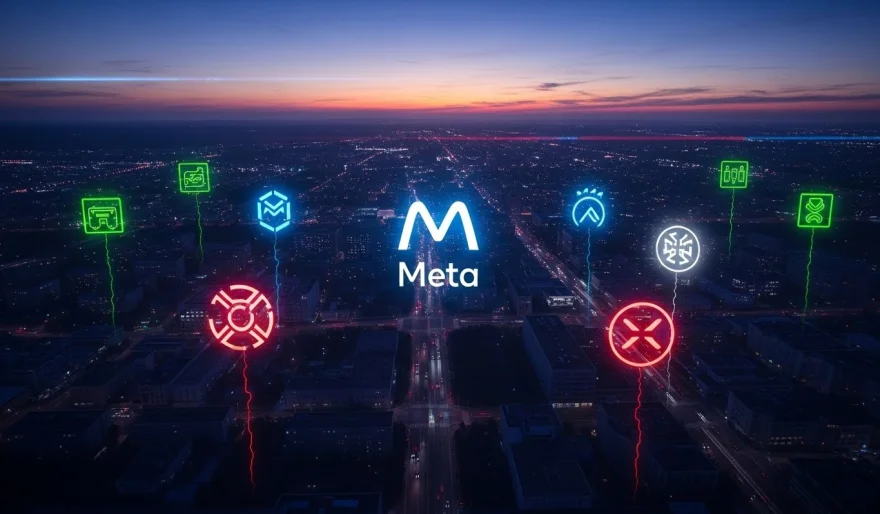
Italy’s competition watchdog has ordered Meta to suspend a policy that blocks rival AI chatbots from being distributed via WhatsApp’s business tools. In plain terms: Meta can’t lock competitors out of WhatsApp while pushing its own Meta AI inside the same app — at least not for now.
The Italian Competition Authority (AGCM) says it has seen enough red flags to act before its full investigation wraps up. Its concern? That Meta is using WhatsApp’s dominance to tilt the AI chatbot market in its favor, limiting access, innovation, and choice — all while competition is still fragile.
That’s a strong move. Regulators don’t usually intervene mid-investigation unless they think real damage is happening fast.
What Meta did (and why regulators care)
Back in October, Meta quietly updated its WhatsApp Business API rules. The change bans general-purpose AI chatbots — think ChatGPT, Claude, Perplexity — from being offered through WhatsApp via the API. At the same time, Meta continues integrating Meta AI directly into WhatsApp, front and center.
Meta’s defense is familiar:
“Our API was never meant to be a chatbot distribution platform.”
Technically fair. Strategically convenient.
Because WhatsApp isn’t just another messaging app in Europe — it’s infrastructure. When you control that layer and decide which AIs can and can’t show up, you’re not just shaping UX. You’re shaping the AI market itself.
Italy’s watchdog called this out explicitly, warning that Meta’s conduct could:
-
Limit market access for rival AI providers
-
Slow technical development in AI services
-
Cause “serious and irreparable harm” to competition
That last phrase is regulator-speak for: this could lock the market before it even matures.
The key nuance most people will miss
This ban doesn’t affect businesses using AI for customer service on WhatsApp. Retailers, banks, airlines running AI-powered support bots? They’re fine.
What’s blocked are general-purpose AI assistants — the kind users might talk to the way they talk to Meta AI.
That distinction matters. It shows this isn’t about spam control or bad actors. It’s about who gets to be the default AI inside the world’s most popular messaging app.
Why this matters (beyond Italy)
This isn’t just an Italian problem — it’s a European warning shot.
The European Commission has already opened its own investigation, signaling that this policy may violate EU competition rules by preventing third-party AI providers from reaching users across the EEA.
Zoom out, and the real issue becomes clear:
Distribution is the real AI moat now.
Not models. Not benchmarks. Distribution.
If Meta can say “only our AI lives here” inside WhatsApp, it doesn’t need the best model — it just needs default placement. Regulators see that risk clearly, especially after watching how app stores and search engines shaped entire tech eras.
The bigger tension underneath this story
-
AI companies want access to platforms
-
Platforms want to own the AI layer
-
Regulators want neither side to choke the market early
Italy stepping in before damage is done suggests a shift in tone. Europe isn’t waiting for dominance to be obvious anymore — it’s reacting at the policy-change stage, not the monopoly stage.
For Meta, this could force a rethink. For OpenAI, Anthropic, and others, it’s a temporary lifeline. And for users, it raises a crucial question:
Do we get one AI per platform — or real choice where we already live online?
This case might help decide that.














 AI Agents