Stay Ahead of the Curve
Latest AI news, expert analysis, bold opinions, and key trends — delivered to your inbox.
Websites Are About to Get Rewritten by AI
6 min read Fibr AI uses autonomous agents to turn static webpages into real-time, personalized experiences. Accel just led its $5.7M seed round, betting that AI-driven websites could become the next core internet infrastructure. February 04, 2026 13:45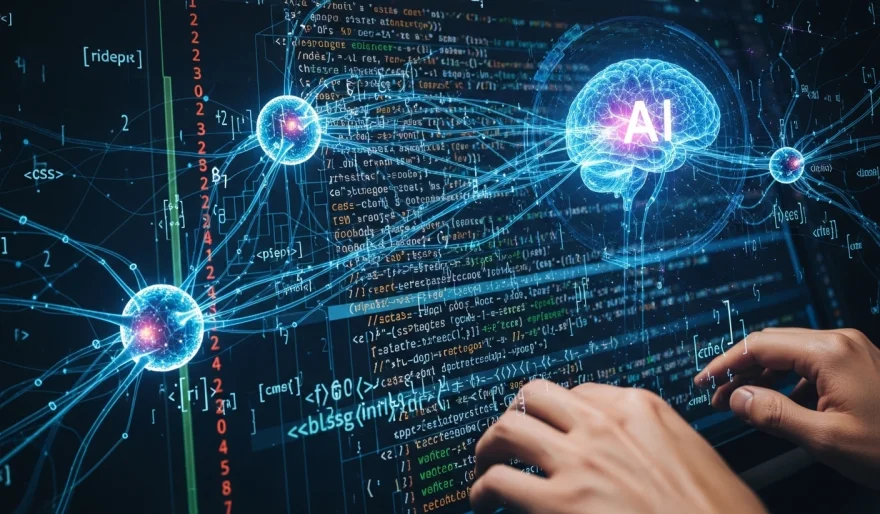
For years, digital marketing has evolved in one direction:
ads became smarter, targeting became sharper, and personalization became extreme.
But the website — the place where all that traffic lands — barely changed.
Fibr AI wants to flip that.
The startup is building AI agents that transform static webpages into dynamic, personalized experiences for every visitor — and top investors are betting that this is the next frontier of AI.
The funding signal
Accel has led Fibr AI’s $5.7 million seed round, following a $1.8 million pre-seed investment in 2024.
The round also included WillowTree Ventures, MVP Ventures, and Fortune 100 operators as angels and advisors, bringing total funding to $7.5 million.
Translation:
Serious players think AI-driven websites could become core digital infrastructure.
The broken model of the internet
Today, companies face a paradox:
-
Ads are personalized in real time.
-
Websites are mostly generic.
-
Personalization requires engineers, agencies, and long approval cycles.
Even large enterprises can only run a few experiments per year because every change is slow, expensive, and risky.
Fibr AI argues that this model is obsolete.
How Fibr AI actually works
Instead of humans manually optimizing websites, Fibr AI deploys autonomous agents that:
-
Infer user intent from behavior and context
-
Generate multiple versions of webpages
-
Continuously test variations
-
Optimize performance in real time
According to co-founder and CEO Ankur Goyal:
“We are the software, and the agency is the workforce of agents we are deploying.”
In practice, this means companies can run thousands of experiments in parallel, not dozens.
Early traction — slow, then sudden
Fibr AI struggled at first.
For nearly two years, the startup had only one or two customers as enterprises hesitated to trust autonomous AI with core digital infrastructure.
But adoption accelerated last year.
Today, the company counts major U.S. enterprises — including banks and healthcare firms — among its customers, with a total of 12 clients.
More importantly, these companies are signing three- to five-year contracts.
That’s a big signal.
As Goyal puts it:
“Once it’s set up, nobody wants to think about it again.”
In other words:
AI-driven websites are becoming invisible infrastructure — like cloud or payments.
Why this matters for the AI world
This story isn’t really about websites.
It’s about a deeper shift:
AI is moving from tools → to autonomous systems.
If Fibr AI’s model scales, it could:
-
Replace large parts of marketing agencies
-
Reduce dependence on engineering teams
-
Redefine how digital experiences are built
-
Turn websites into real-time adaptive systems
The internet would stop being static.
It would become algorithmic.
The hidden risks
But there’s a catch.
Autonomous personalization raises big questions:
-
Who controls the narrative on dynamic webpages?
-
How transparent are AI-driven changes?
-
Could optimization algorithms manipulate users?
-
What happens when AI optimizes for conversion over ethics?
Also, enterprises may resist giving AI too much control over their brand identity and user experience.
The bigger picture
Personalized ads were step one.
Personalized websites are step two.
Autonomous digital experiences are step three.
If Fibr AI is right, the future of the internet won’t be designed by humans alone.
It will be co-designed — continuously — by AI.
Bottom line
Fibr AI isn’t just building better websites.
It’s quietly proposing a new operating system for the web.
And if this model wins,
the way we experience the internet will never be the same again.










 AI Agents