Stay Ahead of the Curve
Latest AI news, expert analysis, bold opinions, and key trends — delivered to your inbox.
Trump Administration Eyes Ban on Chinese Data Center Devices
4 min read The Trump administration is drafting a proposal to ban imports of new Chinese-made optical transceivers used in AI data centers, citing national security concerns and a push to reduce U.S. reliance on Chinese technology. August 04, 2026 12:41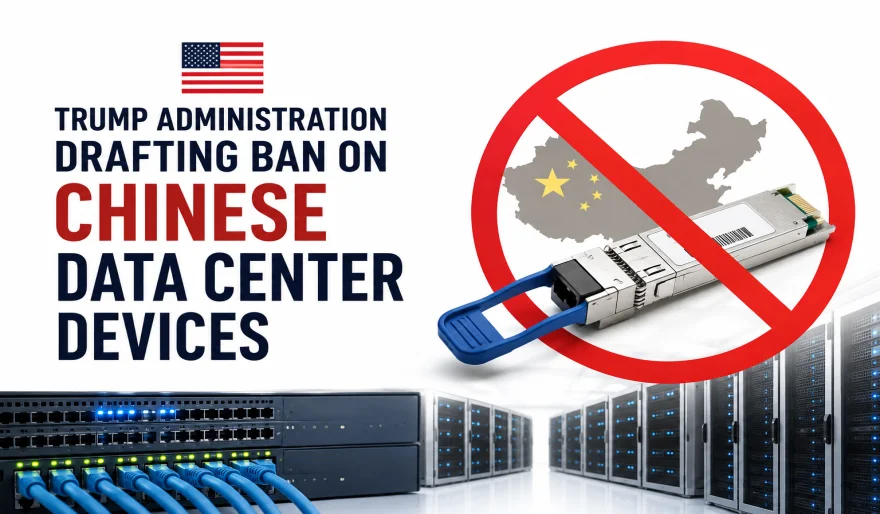
The U.S.–China AI rivalry is expanding beyond chips—and into the infrastructure that powers AI itself.
According to sources familiar with the matter, the Trump administration is preparing restrictions on new Chinese optical transceivers, the high-speed networking components that move massive amounts of data between servers inside AI data centers. The proposed ban, led by the U.S. Federal Communications Commission (FCC), is intended to prevent potential cybersecurity threats, including data theft, malware, and disruptions to critical AI infrastructure. The proposal could still be revised or shelved before it takes effect.
The move would likely impact major Chinese suppliers, including Zhongji Innolight, one of the world's largest producers of optical transceivers. At the same time, U.S. manufacturers such as Coherent and Lumentum could benefit from increased demand as cloud providers seek alternative suppliers. However, replacing Chinese components may also raise costs for AI infrastructure operators, including major cloud companies.
The proposal is the latest step in Washington's broader effort to secure AI supply chains and reduce dependence on Chinese technology as competition for AI leadership intensifies.
Why it matters
The AI race isn't just about building better models—it's about controlling the infrastructure behind them. Data center networking equipment has become a strategic asset, making supply chain security a growing priority for governments.
The upside
- Strengthens security for U.S. AI data centers.
- Reduces dependence on Chinese networking hardware.
- Creates opportunities for domestic suppliers.
- Supports long-term AI infrastructure resilience.
The downside
The restrictions could increase hardware costs, disrupt existing supply chains, and escalate technology tensions between the U.S. and China, potentially triggering retaliatory measures.
Looking ahead
As AI infrastructure becomes a matter of national security, governments are likely to scrutinize every layer of the technology stack—from chips and networking equipment to AI models themselves. The battle for AI leadership is increasingly becoming a battle over who controls the systems that keep AI running.



















 AI Agents