Stay Ahead of the Curve
Latest AI news, expert analysis, bold opinions, and key trends — delivered to your inbox.
Trump Administration Bans New Chinese Humanoid Robots to Protect U.S. AI Buildout
4 min read The Trump administration has announced a sweeping ban on imports of new Chinese humanoid robots, quadruped robots, and connected power inverters, citing national security concerns and the need to protect America's AI infrastructure. The move is the latest escalation in the U.S.-China technology rivalry and aims to strengthen domestic AI and robotics manufacturing. July 29, 2026 11:24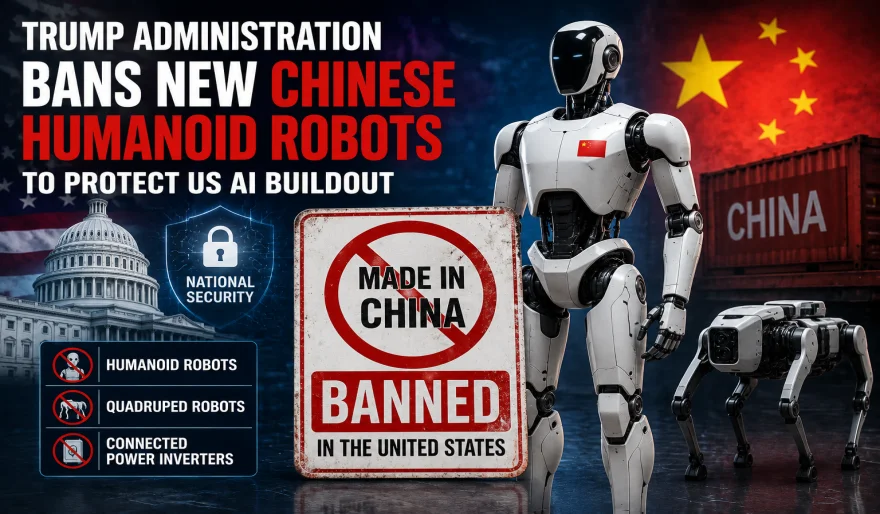
The United States is taking another major step to reduce its dependence on Chinese technology.
The Federal Communications Commission (FCC), under the Trump administration, has barred imports of new Chinese-made humanoid robots, robot dogs, and connected power inverters. Officials argue these products could pose cybersecurity and espionage risks while also threatening America's long-term AI competitiveness.
Unlike a blanket recall, the restrictions apply primarily to new, unreleased models entering the U.S. market. However, regulators also retain the authority to review and potentially revoke approvals for products already authorized if national security concerns emerge.
The policy is expected to hit Chinese robotics companies such as Unitree, one of the world's leading humanoid robot manufacturers, which has rapidly expanded globally with lower-cost robots used in research, education, and industrial automation. The administration says the goal is to prevent future dependence on Chinese robotics in the same way previous governments became dependent on foreign supply chains for critical technologies.
The ban also covers connected power inverters—key components used in renewable energy systems and AI data centers. U.S. officials argue that securing both robotics and energy infrastructure is essential as AI computing demands continue to grow. China has condemned the decision, calling it an unfair restriction on Chinese companies and warning of possible retaliation.
Why It Matters
The AI race is no longer just about building better models—it's increasingly about controlling the hardware, infrastructure, and supply chains that power them. As humanoid robots become a key part of manufacturing, logistics, and future AI applications, governments are treating them as strategic assets rather than ordinary consumer products.
The Upside
- Could accelerate investment in U.S.-based robotics and AI manufacturing.
- Reduces perceived cybersecurity risks tied to connected foreign hardware.
- Strengthens domestic supply chains for AI infrastructure and advanced robotics.
The Downside
- U.S. researchers and startups may lose access to affordable Chinese robots widely used for development.
- The move could deepen U.S.-China technology tensions and trigger retaliatory measures.
- Higher costs and reduced competition could slow robotics adoption in some industries.
Looking Ahead
Humanoid robots are emerging as the next strategic frontier in AI. The latest restrictions show that governments increasingly view advanced robotics the same way they view semiconductors and AI chips: as technologies with both commercial and national security implications. The global AI race is expanding beyond software into the physical machines that will power tomorrow's factories, warehouses, and everyday life.



















 AI Agents