Stay Ahead of the Curve
Latest AI news, expert analysis, bold opinions, and key trends — delivered to your inbox.
SpaceX IPO Could Drain the Market—And That’s the Real Risk
4 min read SpaceX’s upcoming IPO could become the largest in history—but instead of lifting the market, it may drain investor capital from smaller listings. In an already fragile IPO environment, this “capital vacuum” effect could delay or weaken other companies going public, signaling a shift toward mega-deals dominating market liquidity. April 07, 2026 12:00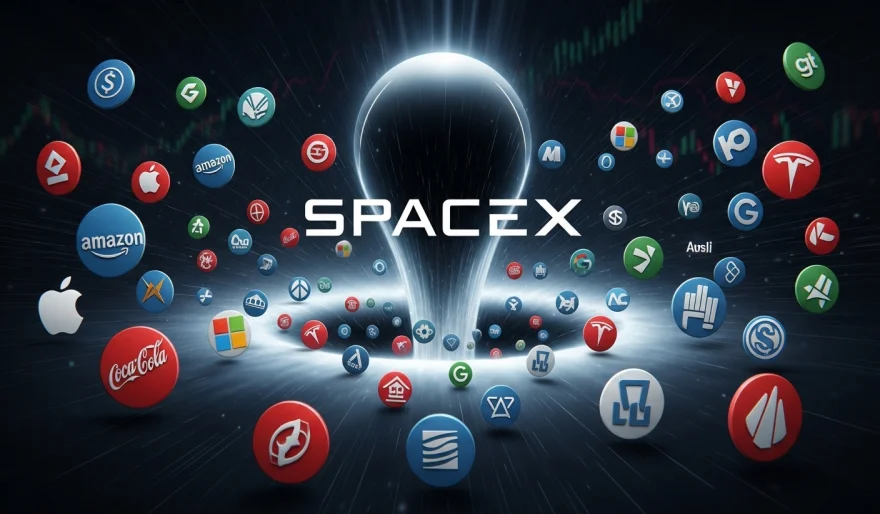
The most anticipated IPO in years might not just dominate headlines—it could crowd out the entire market.
SpaceX is preparing what could be the largest IPO in history, with estimates ranging up to $75B raised and valuations pushing toward $1.7T+. But instead of lifting the IPO market, analysts are warning it could do the opposite: suck the oxygen out of it.
What’s really happening
The IPO market in 2026 is already fragile—hit by geopolitical tensions, volatile energy prices, and uneven returns from recent listings.
Now drop in a deal the size of SpaceX, and you get a simple equation:
👉 Massive IPO = massive capital absorption
Investors, funds, and even underwriting banks have limited bandwidth. A deal this big doesn’t just attract attention—it redirects liquidity.
Historically, mega-IPOs have done this before—pulling money and momentum away from smaller listings trying to go public at the same time.
Why this matters
This isn’t just about SpaceX—it’s about who gets funded next.
- Smaller startups planning IPOs could see weaker demand
- Late-stage companies may delay listings to avoid competing
- Even AI giants like OpenAI and Anthropic might shift timelines
In short:
👉 One giant listing could reshape the entire IPO calendar
The subtle twist
There’s a paradox here.
A blockbuster IPO should boost confidence in public markets. But at this scale, it creates concentration risk:
- Too much capital flows into one company
- Too little is left for everyone else
Even index inclusion could amplify this, forcing funds to buy in heavily and further skew market balance.
The bigger picture (hot take)
We’re entering an era of “winner-takes-liquidity.”
The biggest AI and tech companies aren’t just competing on products—they’re competing for capital dominance.
And if SpaceX pulls this off, it sends a clear signal:
👉 In today’s market, being big isn’t enough—
👉 You have to be so big you absorb the market around you.



















 AI Agents