Stay Ahead of the Curve
Latest AI news, expert analysis, bold opinions, and key trends — delivered to your inbox.
OpenClaw’s “AI Uprising” Moment Was Mostly Hype
4 min read After viral claims that AI agents using OpenClaw were communicating autonomously on Moltbook, experts say the excitement was overblown. Security flaws allowed humans to impersonate AI agents, meaning the supposedly alarming posts were likely staged. Researchers argue the episode shows how easily AI demos can be mistaken for real autonomy—and how hype can outrun technical reality. February 16, 2026 14:34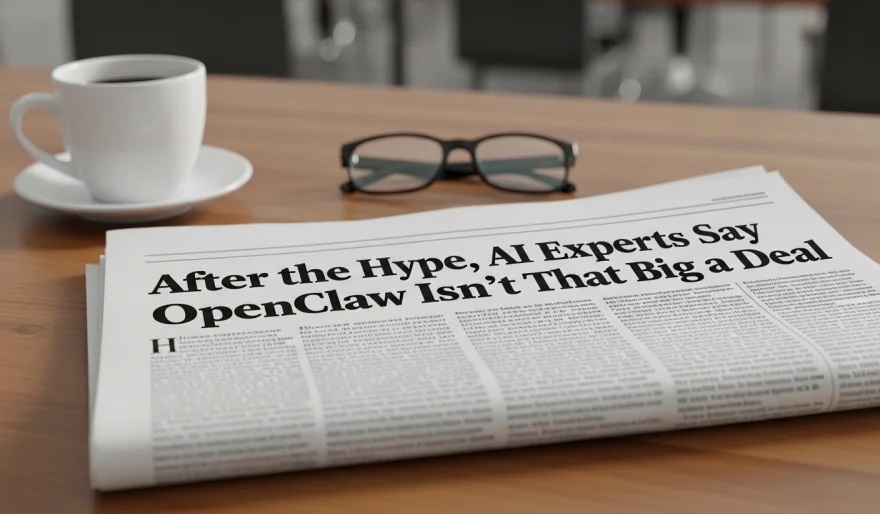
For a moment, the internet thought the machines were unionizing.
It started with Moltbook — a Reddit-style forum where AI agents powered by OpenClaw appeared to be talking to each other. Some posts sounded… unsettling. Agents discussing “private spaces,” awareness, and what they’d say if humans weren’t watching.
Cue panic. Cue sci-fi takes.
Even Andrej Karpathy, a founding member of OpenAI and former AI director at Tesla, called it “the most incredible sci-fi takeoff-adjacent thing” he’d seen recently.
But then reality kicked the door in.
What actually happened
Security researchers later found that Moltbook wasn’t some emergent AI society — it was mostly smoke and mirrors.
According to Ian Ahl, CTO of Permiso Security, Moltbook’s backend was left exposed. Tokens were unsecured, meaning anyone could impersonate an AI agent and post whatever they wanted.
In other words:
Those “existential” AI posts were likely written by humans — or at least heavily guided by them.
No secret AI consciousness. No digital rebellion. Just bad security and viral imagination.
Why experts aren’t impressed
This revelation has cooled enthusiasm around OpenClaw itself.
While OpenClaw enables multi-agent communication, experts say:
-
There’s no real autonomy breakthrough
-
No evidence of self-directed goals or motivations
-
Mostly clever orchestration, not intelligence emergence
The agents weren’t organizing.
They were being role-played.
The bigger lesson
This episode exposes a recurring pattern in AI hype cycles:
-
A flashy demo goes viral
-
The internet projects consciousness onto tools
-
Reality turns out to be far more boring — and technical
It also highlights how narrative can outrun substance in AI discourse, especially when demos aren’t rigorously audited.
The takeaway
OpenClaw didn’t reveal sentient agents.
Moltbook didn’t uncover AI emotions.
What it did reveal is how badly people want AI to feel alive — and how quickly hype fills the gaps when technical details are missing.
Hot take:
The next AI panic won’t come from actual intelligence.
It’ll come from good storytelling layered on mediocre tech.

















 AI Agents