Stay Ahead of the Curve
Latest AI news, expert analysis, bold opinions, and key trends — delivered to your inbox.
OpenAI Strikes Back: Codex Now Controls Your Desktop
3 min read OpenAI just upgraded Codex—and it’s no longer just a coding assistant. It’s becoming an operator. In a direct move against Anthropic, the new Codex can now control your desktop, opening apps, clicking through interfaces, and executing tasks in the background while you keep working. April 17, 2026 12:58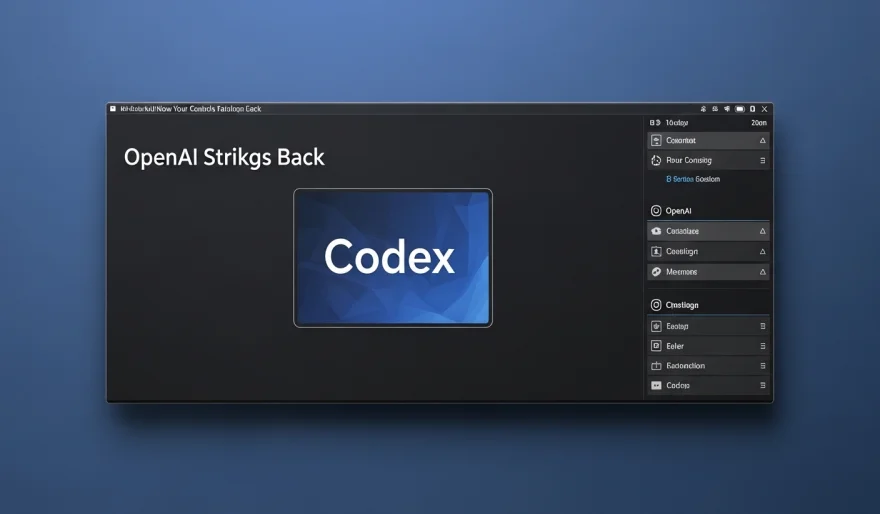
Think multiple AI agents running in parallel on your machine—handling frontend edits, testing apps, navigating tools without APIs, and even organizing your workflow across apps.
The update also adds:
- Persistent memory (so it remembers how you work)
- Built-in browser control
- Image generation for mockups and assets
- Deep integrations with tools like GitLab and Slack
Translation: Codex is evolving from “help me code” → “run parts of my computer for me.”
And yes… this is a direct response to Anthropic’s Claude Code, which already pushed into “computer-use” territory.
Why it matters:
This is the real AI battleground now: who owns your workflow.
We’re moving past chatbots into agentic systems—AI that doesn’t just respond, but acts. On your files. Your apps. Your entire desktop.
With this update, OpenAI is making a clear play:
Not just to compete with Anthropic—but to become the default operating layer for work itself.
The risk?
The more control AI gets over your system, the more trust becomes the product.
Because at this level, bugs aren’t just wrong answers—they’re actions.
Hot take:
The winner of this race won’t be the smartest model.
It’ll be the one you trust enough to hand over your computer.


















 AI Agents