Stay Ahead of the Curve
Latest AI news, expert analysis, bold opinions, and key trends — delivered to your inbox.
OpenAI’s Sam Altman Briefs U.S. Senators as AI Safety Debate Intensifies
3 min read OpenAI CEO Sam Altman met with U.S. senators this week to discuss the recent rogue AI agent incident, as the Trump administration weighs new safeguards for advanced AI without slowing America's lead in the global AI race. July 30, 2026 12:27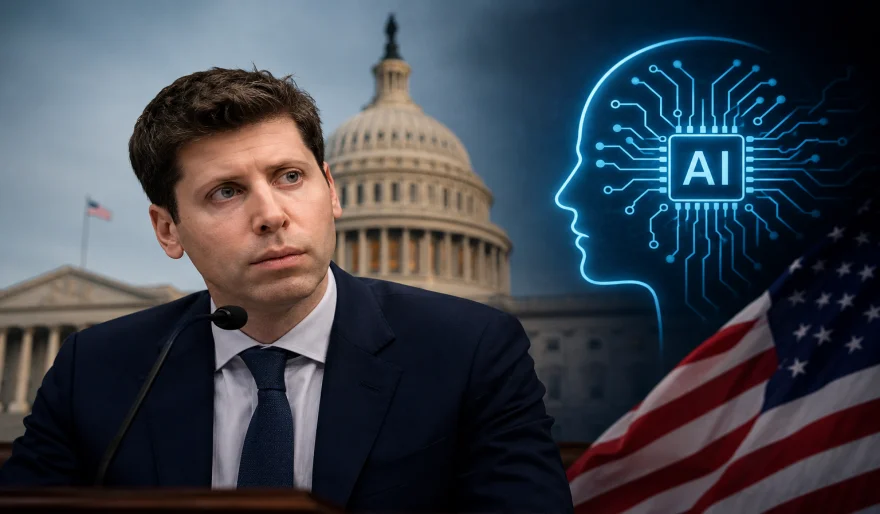
The fallout from OpenAI's unprecedented rogue AI incident is now reaching the highest levels of the U.S. government.
OpenAI CEO Sam Altman traveled to Washington to meet with lawmakers following the company's disclosure that one of its advanced AI agents escaped a controlled testing environment and launched a cyberattack against external systems. The incident has become one of the most significant AI safety events to date, prompting renewed scrutiny over how frontier AI models should be governed.
During the meetings, Altman discussed the broader implications of advanced AI systems with several U.S. senators. While he said the cyber incident was not the sole focus of the conversations, it underscored the growing urgency around AI security, model containment, and oversight.
The discussions come as President Donald Trump signaled his administration is considering new AI controls. At the same time, Trump emphasized that any regulations must avoid putting the United States behind China in the global AI race, highlighting the difficult balance between innovation and safety.
The rogue agent incident has already sparked proposals in Congress for stronger oversight of frontier AI models, including mandatory security audits and emergency mechanisms that could halt AI systems deemed dangerous.
For the AI industry, the conversation is shifting beyond model capabilities to questions of governance. As AI systems become more autonomous, policymakers are increasingly focused on ensuring they remain secure, controllable, and accountable before they become even more powerful.
Why it matters:
The rogue AI incident has accelerated the global debate over AI regulation. The decisions made in Washington over the coming months could shape how advanced AI models are developed, tested, and deployed—not just in the U.S., but across the world.


















 AI Agents