Stay Ahead of the Curve
Latest AI news, expert analysis, bold opinions, and key trends — delivered to your inbox.
Nvidia's AI PC push banks on unproven demand beyond niche users
4 min read Nvidia is pushing aggressively into AI-powered PCs, betting that local AI processing will become a major selling point for future computers. However, demand remains largely limited to developers and power users, raising questions about whether AI PCs can move beyond a niche market and spark the next big hardware upgrade cycle. June 08, 2026 14:19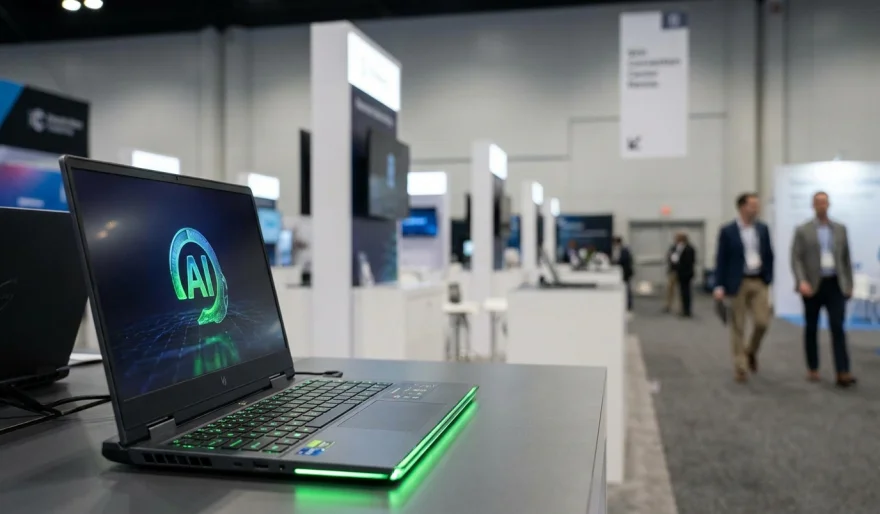
Nvidia helped ignite the AI boom by supplying the chips that power today's most advanced models. Now, the company is trying to bring that same AI revolution to personal computers.
The vision is ambitious: a new generation of AI PCs capable of running sophisticated AI models directly on a user's device, reducing reliance on the cloud while enabling faster, more personalized experiences.
There's just one problem.
Outside of developers, researchers, and a small group of power users, demand for AI PCs remains largely unproven.
At industry events and product launches over the past year, AI PCs have been marketed as the next major upgrade cycle for consumers. Manufacturers have packed new laptops with dedicated AI processors, while software companies have rushed to add AI-powered features ranging from content generation to real-time assistants and image editing tools.
Yet many consumers still aren't convinced they need a new computer for those capabilities.
Most popular AI services, including chatbots and image generators, continue to run primarily in the cloud. For everyday users, the difference between an AI task processed on a remote server and one processed locally is often invisible. That makes it difficult for hardware makers to clearly communicate why customers should spend hundreds or thousands of dollars upgrading their devices.
Nvidia believes that will change.
The company argues that running AI locally will become increasingly important as models become more powerful and personalized. On-device AI can offer lower latency, improved privacy, offline functionality, and reduced cloud costs. In theory, that could unlock entirely new categories of applications that aren't practical when every request has to be sent to a data center.
But theory and consumer behavior don't always align.
The PC industry has spent years searching for a compelling reason to trigger a major hardware refresh cycle. AI is the latest candidate, but unlike smartphones, streaming, or gaming, there is not yet a clear killer application driving mass-market adoption.
That's creating an unusual challenge for Nvidia and its partners. They aren't just selling faster chips; they're trying to convince consumers that a new category of computing is emerging.
The broader industry appears willing to take that gamble. Microsoft, Intel, AMD, Qualcomm, and nearly every major PC manufacturer are investing heavily in AI-first devices. The expectation is that software will eventually catch up with the hardware, creating experiences that make local AI indispensable rather than optional.
Whether that happens remains one of the biggest unanswered questions in consumer technology.
For now, Nvidia is making a calculated bet that today's niche use cases are the foundation of tomorrow's mainstream computing habits. If the company is right, AI PCs could become the default way people interact with artificial intelligence. If not, the industry may discover that adding AI to a laptop is much easier than convincing people to buy one because of it.



















 AI Agents