Stay Ahead of the Curve
Latest AI news, expert analysis, bold opinions, and key trends — delivered to your inbox.
Mistral AI Launches Devstral 2 and Vibe CLI to Join the Vibe-Coding Revolution
6 min read Mistral AI launches Devstral 2 and Vibe CLI, bringing context-aware coding models to developers. The move positions the French startup to compete with GPT-4, Claude, and other AI coding assistants in the growing vibe-coding market. December 09, 2025 20:30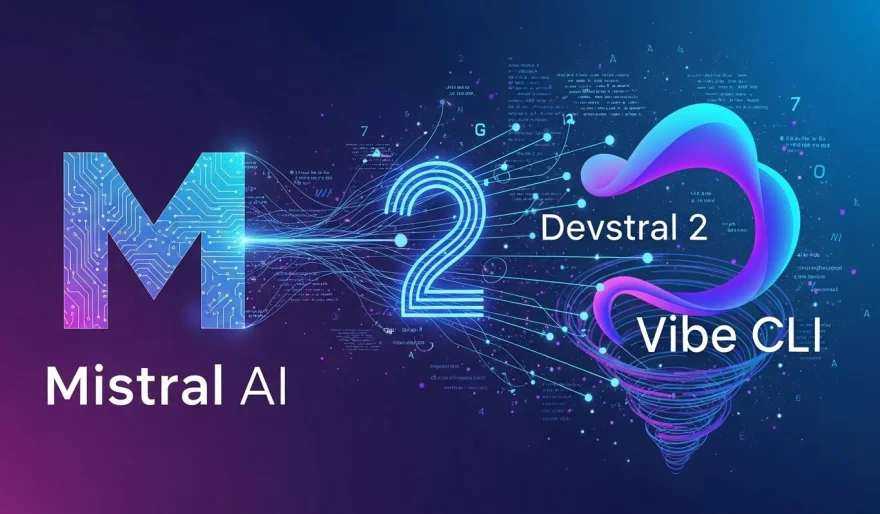
Mistral AI Surfs the “Vibe-Coding” Wave with New Devstral 2 Models and Vibe CLI
The French unicorn is stepping into the coding arena — and signaling it wants a real shot at Anthropic, OpenAI, and the rising code-assistant startups.
Mistral AI just dropped Devstral 2, its newest generation of coding models, plus a new tool called Mistral Vibe, a command-line interface designed for natural-language coding automation. The timing is no accident: vibe-coding — the new trend of “just telling your computer what you want” — is exploding, powering the rise of tools like Cursor and Supabase’s AI workflows.
Mistral wants in. And this move shows it’s aiming far beyond open-source hype — it’s going after production-grade enterprise coding.
What Mistral Actually Launched
Devstral 2 (123B parameters)
-
Heavy-duty coding model aimed at enterprise workflows
-
Requires at least 4 H100s — a serious model for serious stacks
-
Ships under a modified MIT license
-
Free during launch, later priced at $0.40/$2.00 per million tokens (in/out)
Devstral Small (24B parameters)
-
Lightweight version for local or consumer hardware
-
Apache 2.0 license
-
Pricing: $0.10/$0.30 per million tokens
Mistral Vibe CLI
-
A natural-language coding shell
-
Handles file editing, code search, Git operations, and command execution
-
Pulls context automatically from file structures and Git status
-
Basically: a context-aware “AI teammate” inside the terminal
This is Mistral’s clearest attempt yet to compete with Claude 3.5 Sonnet, GPT-4.1, and the growing wave of code-native models.
Why This Matters
1. The coding assistant market is heating up — fast.
Cursor set a new tone: coding with AI isn’t autocomplete anymore. It’s “vibe-coding,” where the model understands your entire project context and acts like a collaborator. Mistral joining this wave means the trend just got mainstream validation.
2. Enterprises want context-aware AI — and Mistral is betting big here.
Context memory is becoming the real differentiator. If your model doesn’t remember, you fall behind. Mistral’s Vibe is engineered for long-term project awareness, which developers love and enterprises pay for.
3. Mistral needs revenue. Big models + enterprise adoption = real money.
Offering a free period followed by tiered pricing is the playbook: hook developers now, charge teams later.
Pros
-
Strong move into a fast-growing niche (AI coding assistants)
-
Context awareness gives them an edge in real workflows
-
Open-weight strategy continues to attract devs
-
Pricing is competitive vs U.S. rivals
-
Enterprise-ready deployment for the large model
Cons
-
High compute requirements limit adoption of Devstral 2
-
Faces intense competition from Claude, GPT-4-class models, and specialized coding AIs
-
Context-aware features must be flawless — devs switch tools fast
-
Mistral still lacks the ecosystem depth of U.S. incumbents
Hot Take
This is Mistral’s most serious move into enterprise AI yet. Devstral 2 and Vibe are less about beating open-source rivals and more about proving Mistral can build premium, workflow-grade AI tools — not just models with good vibes and good press.
If the vibe-coding trend becomes the new default for engineering teams, Mistral doesn’t need to beat OpenAI or Anthropic; it just needs to get inside dev workflows early. And this launch gives them a fighting chance.






 AI Agents