Stay Ahead of the Curve
Latest AI news, expert analysis, bold opinions, and key trends — delivered to your inbox.
Mira Murati Steps Back Into the Spotlight
5 min read Mira Murati, former OpenAI CTO, is cautiously returning to public attention after stepping back from the spotlight. Her re-emergence is being closely watched as a signal of where AI leadership is heading next, especially as the industry shifts from rapid innovation to questions of safety, governance, and long-term impact. June 05, 2026 12:56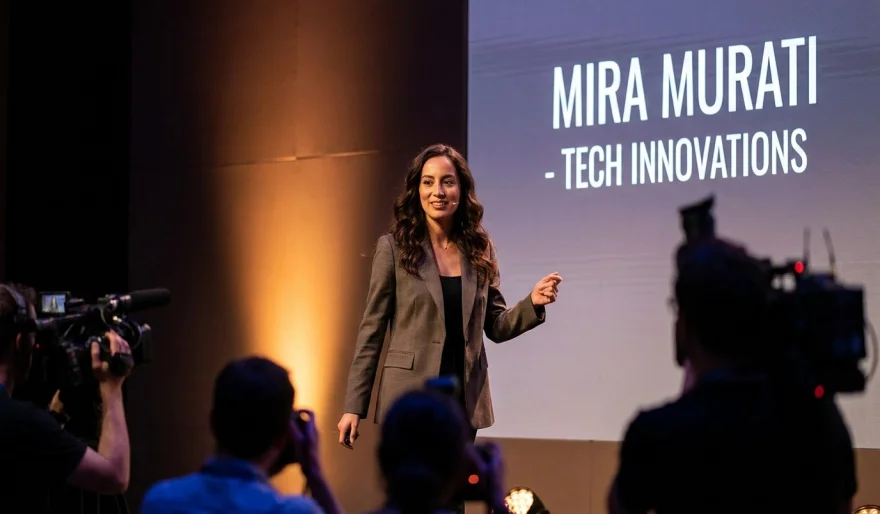
Mira Murati, the former OpenAI chief technology officer who helped shape some of the most widely used AI systems in the world, is slowly re-emerging into public view—but doing it with the same precision and restraint that defined her time behind the scenes.
After spending years at the center of the generative AI explosion, Murati has largely avoided the spotlight since stepping away from OpenAI. Now, her return—whether through interviews, appearances, or new ventures—is being watched closely across Silicon Valley, not for spectacle, but for signals.
Unlike many high-profile AI figures who lean into hype cycles, Murati has built a reputation for caution. At OpenAI, she was often seen as one of the more measured voices during periods of rapid product expansion, particularly as ChatGPT and other systems moved from research tools into global consumer platforms used by hundreds of millions.
Her “careful” re-entry reflects a broader tension in the AI world right now: the balance between visibility and responsibility. As AI leaders become public figures in their own right, every statement can move markets, shape regulation debates, or influence public trust in the technology itself.
Why this matters
Murati isn’t just another AI executive re-entering the conversation—she represents a generation of builders who were inside the rooms where modern AI was scaled into a global force. Any move she makes is interpreted as a potential signal about where the industry is heading next: safety, commercialization, or the next leap in capability.
In a field increasingly defined by personality-driven narratives—Elon Musk’s xAI, Sam Altman’s OpenAI, Dario Amodei’s Anthropic—the reappearance of a quieter, more cautious figure stands out. It suggests that the next phase of AI leadership may not just be about building faster models, but about managing the consequences of what has already been built.
Pros and Cons
On the positive side, Murati’s return could bring a more grounded voice back into the public AI debate. Her track record suggests a focus on safety, product discipline, and responsible deployment—qualities increasingly demanded as AI systems become more powerful and widely used.
Her perspective could also help bridge the gap between technical development and public understanding, especially at a time when regulation and societal concerns are accelerating.
But there are trade-offs. In today’s AI landscape, influence is often tied to visibility. A “careful” approach may limit how much immediate impact she has compared to more aggressive industry figures who dominate headlines and investor attention. There’s also the challenge of whether restraint can compete in a market driven by speed, hype, and constant iteration.
The bigger picture
Murati’s re-emergence comes at a time when the AI industry is entering a more complex phase—less about breakthroughs in model capability alone, and more about governance, trust, and long-term integration into society.
In that context, her presence isn’t just about one individual returning to the spotlight. It reflects a broader question the industry is starting to face: after the hype phase, who shapes the rules of what comes next?

















 AI Agents