Stay Ahead of the Curve
Latest AI news, expert analysis, bold opinions, and key trends — delivered to your inbox.
Meta’s New AI Chips Enter Production This September
3 min read Meta is taking another big step toward AI independence as its in-house AI chips move into mass production this September. July 09, 2026 18:48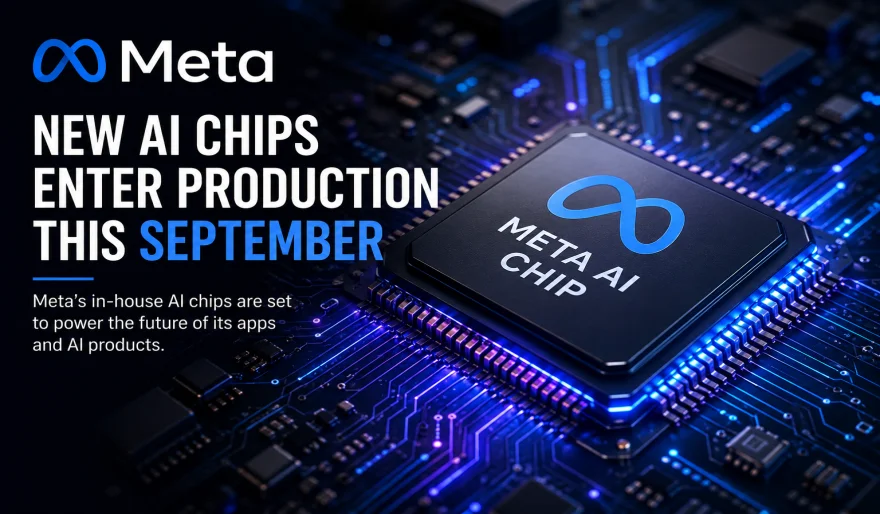
The AI infrastructure race is entering a new phase, and Meta doesn't want to rely solely on Nvidia anymore.
According to reports, Meta's custom AI chips are set to begin production in September, marking a major milestone in the company's plan to build its own AI hardware ecosystem. The chips are designed to power AI training and inference across Meta's massive platforms, including Facebook, Instagram, WhatsApp, and its growing lineup of AI assistants.
By developing its own silicon, Meta hopes to reduce costs, improve performance, and lessen its dependence on third-party chip suppliers as demand for AI computing continues to surge.
The move puts Meta alongside other tech giants like Google, Amazon, Microsoft, and OpenAI, all of which are investing heavily in custom AI hardware to gain an edge in the increasingly competitive AI race.
Why it matters
Owning the hardware stack gives Meta greater control over its AI future. Custom chips could lower infrastructure costs, speed up AI development, and make it easier to deploy advanced AI features to billions of users.
The upside
- Lower long-term AI infrastructure costs.
- Reduced reliance on Nvidia's high-demand GPUs.
- Faster optimization for Meta's own AI models and products.
- Stronger position in the AI infrastructure race.
The downside
Designing AI chips is expensive and risky. If the hardware underperforms or production faces delays, Meta could still depend heavily on external suppliers while competitors continue advancing.
Looking ahead
September won't just mark the start of chip production—it could signal the beginning of a new era where the biggest AI companies compete not only on models, but on the silicon powering them.
User Comments (0)
Popular Apps

















 AI Agents