Stay Ahead of the Curve
Latest AI news, expert analysis, bold opinions, and key trends — delivered to your inbox.
Meta Launchs Muse Code Beta for Full Software Engineering Tasks
3 min read Meta is expanding beyond AI chatbots with Muse Code Beta, an AI coding assistant designed to handle complete software engineering workflows—from writing code and fixing bugs to testing, reviewing, and deploying applications. August 07, 2026 13:43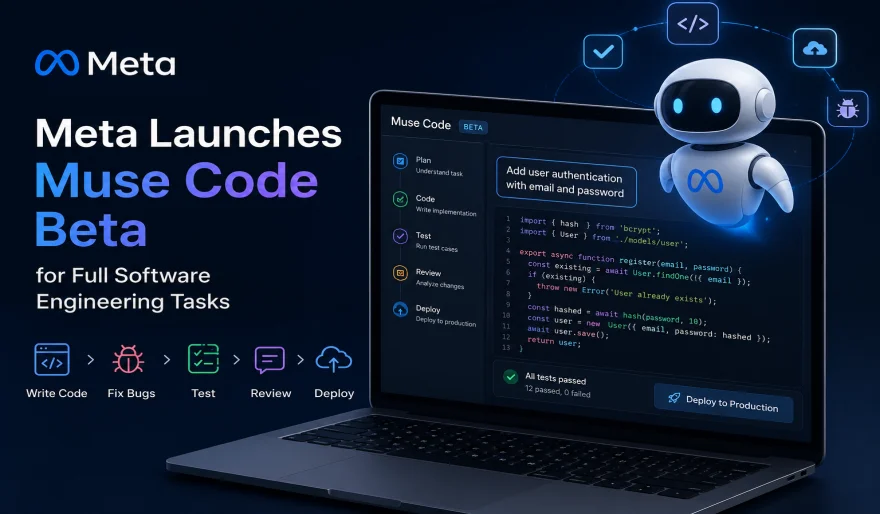
Meta is taking a much bigger swing at AI-powered software development.
The company has introduced Muse Code Beta, an advanced coding assistant that goes beyond simple code completion. Instead of just suggesting the next line of code, Muse is built to tackle end-to-end engineering tasks, allowing developers to describe what they want in plain English while the AI generates features, debugs issues, writes tests, reviews pull requests, and even helps deploy applications.
This marks Meta's entry into the growing race to build AI agents capable of acting like junior—or even mid-level—software engineers. Rather than replacing developers, Muse is designed to eliminate repetitive work so engineers can focus on architecture, product decisions, and innovation.
The launch also strengthens Meta's AI ecosystem by giving developers another reason to build within its growing family of open AI models and tools.
Why It Matters
Software engineering is quickly becoming one of AI's biggest battlegrounds. With OpenAI, Anthropic, Google, and Microsoft all investing heavily in AI coding assistants, Meta doesn't want to be left behind. Muse signals that the future of programming may involve managing AI teammates instead of writing every line of code manually.
The Upside
Developers could build products significantly faster, reduce debugging time, automate testing, and accelerate releases. Startups and small engineering teams stand to benefit the most, allowing them to ship software with fewer resources.
The Downside
AI-generated code can still introduce security flaws, hidden bugs, or inefficient designs. Human oversight remains essential, especially for production systems where reliability and compliance are critical.
Looking Ahead
The race is shifting from AI that writes snippets of code to AI that can complete entire engineering projects. If Muse delivers on its promise, software development could become increasingly focused on directing intelligent AI agents rather than manually writing code.














 AI Agents