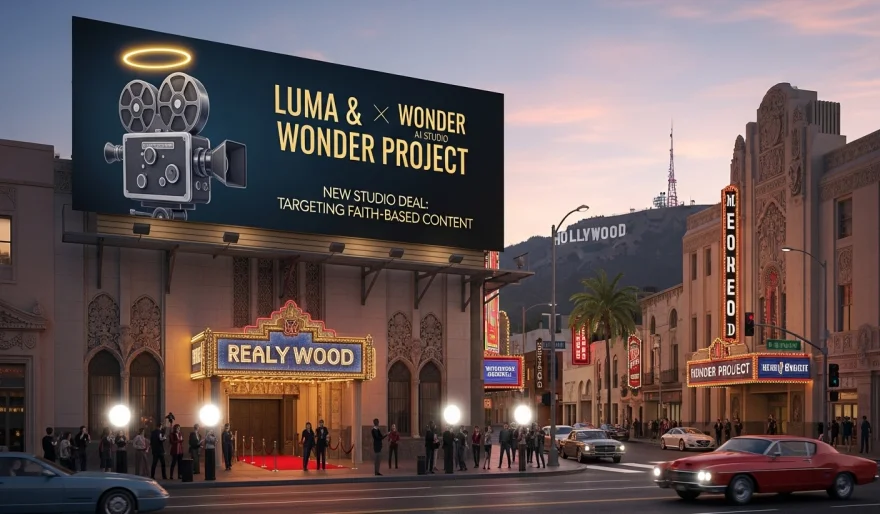
The collaboration aims to use Luma’s generative video technology to produce high-quality films and series at a fraction of traditional costs. Think cinematic visuals, faster production timelines, and scalable content pipelines—all powered by AI.
But the real twist? The focus isn’t mainstream Hollywood—it’s the fast-growing, underserved market of faith-based content. Wonder Project, already building a reputation in that space, is betting that AI can unlock a new era of storytelling for religious audiences without the usual budget constraints.
This isn’t just about efficiency. It’s about reshaping who gets to tell stories—and how quickly they can do it.
Why it matters:
AI video is moving from experimental clips to full-blown studios.
With this move, Luma AI is signaling that generative video tools are ready for structured, repeatable production workflows—not just one-off creations. And by partnering with a niche-focused player like Wonder Project, they’re skipping the crowded Hollywood pipeline and going straight to a loyal, global audience.
There’s also a deeper shift happening:
AI is lowering the barrier to entry for entire genres.
Faith-based media has traditionally been limited by funding, distribution, and production scale. AI flips that. Now, smaller studios can produce content that competes visually with big-budget films—without the same capital.
Hot take:
This is the blueprint.
Instead of trying to disrupt Hollywood head-on, AI studios will fragment the market, dominating niche audiences first—faith, education, local-language content—before going mainstream.
And by the time Hollywood reacts, the production model may have already changed for good.







 AI Agents