Stay Ahead of the Curve
Latest AI news, expert analysis, bold opinions, and key trends — delivered to your inbox.
Google Will Label AI-Generated Ads Across Its Platforms
3 min read Google is introducing new transparency measures that will clearly identify ads created or significantly edited with AI, giving users more insight into what they're seeing as generative AI becomes a bigger part of digital advertising. July 10, 2026 11:57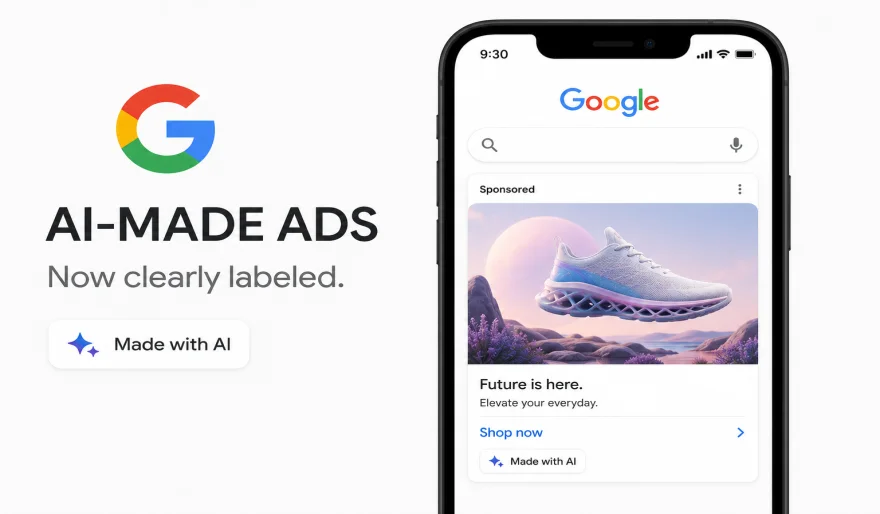
Google is making AI-generated advertising a lot more transparent.
The company announced that it will begin labeling ads that are created or heavily modified using generative AI, helping users distinguish between traditional advertising content and AI-generated creative. The move comes as AI tools become increasingly common in producing marketing images, videos, voiceovers, and promotional copy.
The new disclosures will appear through Google's ad transparency systems, making it easier for users to understand when AI played a major role in creating an advertisement. The labels are designed to build trust without limiting advertisers' ability to use AI-powered creative tools.
For advertisers, the update reflects Google's growing push toward responsible AI adoption. Businesses can still leverage generative AI to create campaigns faster and at lower cost, but they'll now be expected to disclose when AI has materially contributed to the final ad.
The decision also aligns with a broader industry trend. As AI-generated content becomes harder to distinguish from human-created media, technology companies and regulators are increasingly calling for clearer labeling to reduce confusion, combat misinformation, and improve transparency across digital platforms.
Google's latest move signals that AI disclosure is quickly becoming a standard feature—not just for political content or deepfakes, but for everyday advertising viewed by billions of people.
Why it matters: AI is transforming digital advertising, but trust remains essential. By labeling AI-generated ads, Google is betting that greater transparency will strengthen user confidence while allowing brands to continue embracing AI-powered creativity.














 AI Agents