Stay Ahead of the Curve
Latest AI news, expert analysis, bold opinions, and key trends — delivered to your inbox.
Google Rolls Out Gemini AI in Chrome for India, Making Browsing Smarter
4 min read Google has integrated its Gemini-powered AI assistant into Chrome for users in India, bringing contextual AI support directly into the browser. The AI can answer questions, summarize pages, compare tabs, and pull data from multiple Google services — all while supporting over 50 languages, including major Indian languages. This move positions Google at the center of the emerging AI-native browsing experience, signaling a shift toward more productive, integrated workflows for users and raising the bar for competitors in the AI browser space. March 11, 2026 11:50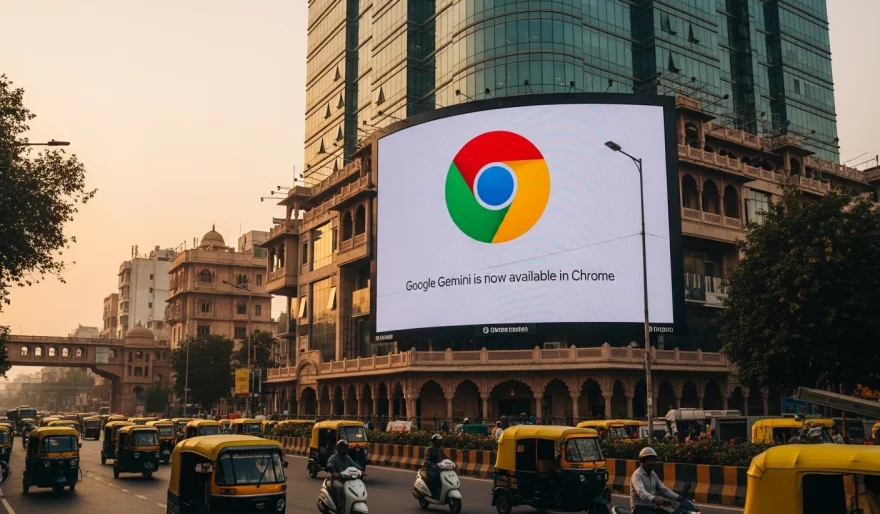
Google is weaving AI deeper into our daily web experience. The company has officially rolled out its Gemini-powered assistant inside Chrome for users in India, joining other early markets like New Zealand and Canada. For those familiar with Gemini, this isn’t just a chatbot — it’s a contextual browsing companion that sits right in the sidebar, ready to answer questions, summarize pages, compare tabs, and even pull in information from multiple Google services without leaving the browser.
The rollout leverages Gemini 3.1, one of Google’s latest AI models, and supports more than 50 languages, including major Indian tongues like Hindi, Tamil, Telugu, Bengali, Marathi, Kannada, Malayalam, and Gujarati. This is more than just convenience — it’s about making AI accessible to users in their own language, a move that could accelerate adoption and set the standard for localized AI browsing tools.
What makes this integration noteworthy is its contextual intelligence. Gemini doesn’t just spit out generic search results; it can synthesize the content of the page you’re on, consider what’s open in other tabs, and draw from core Google apps like Gmail, Calendar, Maps, and YouTube. Add in features like Nano Banana 2 for in-browser image edits, and suddenly Chrome isn’t just a browser — it’s a productivity hub powered by AI.
From a strategic perspective, this rollout is Google’s answer to the growing wave of AI-first browsing and search experiences. Competitors like Microsoft’s Copilot in Edge, OpenAI-powered search tools, and independent AI assistants are pushing the market toward AI-native workflows, and embedding Gemini directly into Chrome ensures Google stays central to the everyday browsing experience, rather than just trailing behind.
But there are subtle risks and questions too. How seamlessly will Gemini handle regional languages at scale? Will users adopt it for complex workflows beyond casual queries? And how will this affect the broader AI ecosystem as browser-first AI becomes normalized? These are the exact challenges Google will be testing in real time in India — one of the fastest-growing markets for AI adoption globally.
In short, Gemini in Chrome isn’t just a feature update — it’s a foothold in the browser war of the next decade, designed to make AI a natural, integrated part of how we explore, consume, and act on information online. For users, it promises more productivity; for competitors, a serious wake-up call.


















 AI Agents