Stay Ahead of the Curve
Latest AI news, expert analysis, bold opinions, and key trends — delivered to your inbox.
China Is Quietly Holding Onto Its Best AI Minds
2 min read China is increasingly retaining its top AI talent, reducing the flow of researchers and engineers to overseas tech hubs as it strengthens its domestic AI ecosystem. May 27, 2026 15:05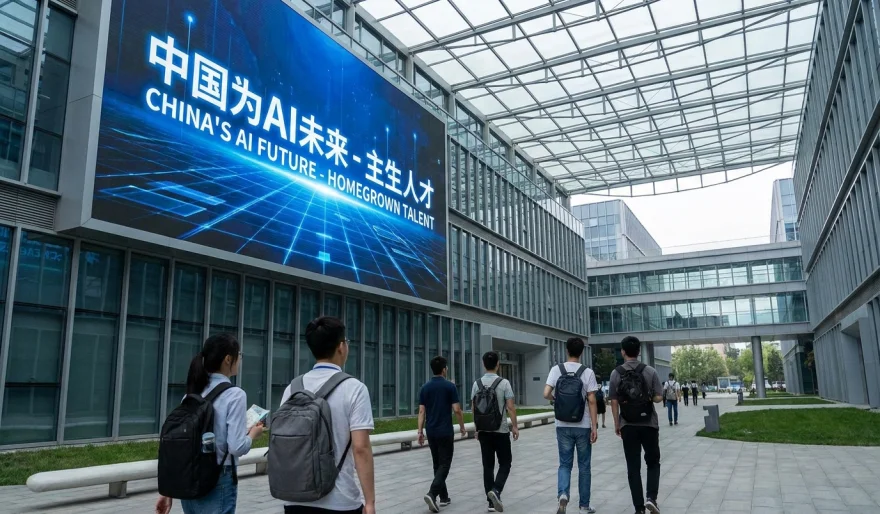
China is increasingly keeping its top AI researchers and engineers at home, tightening the flow of talent moving to US and other global tech hubs.
Instead of seeing a steady “brain drain” like in previous tech waves, the trend is shifting toward retention — with stronger incentives, national AI priorities, and deeper integration between universities, startups, and state-backed labs.
This comes as China pushes hard to close the gap in frontier AI development, especially in areas like large language models, robotics, and applied industrial AI. Losing top talent overseas would slow that momentum, so the focus is now on keeping expertise inside the ecosystem.
At the same time, global AI competition is making talent one of the most valuable strategic assets. It’s no longer just about hardware or datasets — the people building the systems are the real bottleneck.
Why it matters:
AI is turning into a geopolitical talent war. Whoever controls the strongest research minds doesn’t just build better models — they shape the direction of the entire industry. China keeping its AI talent close signals a long-term push to compete at the very top, not just participate.


















 AI Agents