Stay Ahead of the Curve
Latest AI news, expert analysis, bold opinions, and key trends — delivered to your inbox.
California Lithium Developer Controlled Thermal Resources Poised to Go Public in $4.7B SPAC Deal
5 min read A major U.S. critical minerals player is heading for the public markets. Controlled Thermal Resources (CTR), a California‑based lithium and geothermal energy developer, announced that it will go public through a $4.7 billion merger with special purpose acquisition company Plum Acquisition Corp IV, marking a notable resurgence of SPAC activity amid strategic investment in battery metals. March 09, 2026 14:47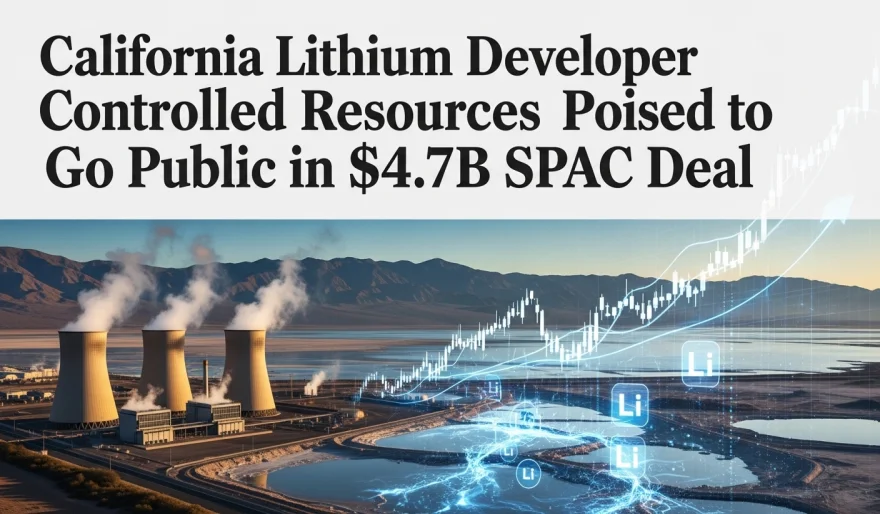
After years of muted enthusiasm for special purpose acquisition companies (SPACs), Wall Street is showing renewed appetite for blank‑check mergers — particularly in sectors tied to the energy transition. CTR’s decision to use a SPAC to list publicly reflects both the bullish investor sentiment around critical minerals and clean energy infrastructure and the ongoing search for alternative paths to the public markets beyond traditional initial public offerings.
The deal values the combined company at about $4.7 billion and is expected to close in the second half of 2026, with the new entity trading on the Nasdaq under the ticker CTRH.
Controlled Thermal’s Ambitious Project Pipeline
CTR’s development focus centers on its Hell’s Kitchen Project in California’s Imperial Valley, an initiative that aims to marry lithium extraction with geothermal power generation. Stage 1 of the project is planned to build a facility capable of producing up to 25 000 metric tons of lithium carbonate annually, alongside a 50‑megawatt clean power plant — a combination of minerals and energy production that aligns with broader industrial and climate goals.
The company already boasts more than $285 million in private investment for the project, underscoring strong backing from investors who see strategic value in domestic lithium supply chains.
Why Lithium Matters — and Why Now
Lithium has become a linchpin of the energy transition — powering electric vehicles, storing renewable energy, and fueling demand from data centers and cloud infrastructure that support artificial intelligence and large‑scale computing. CTR’s CEO has highlighted the importance of 24/7 resilient, low‑carbon power to address rising energy demand in the U.S., particularly from data‑intensive sectors.
As electrification and AI adoption accelerate, governments and businesses alike are racing to secure reliable sources of lithium and other battery metals. Projects that combine resource production with clean energy generation — such as Hell’s Kitchen — are increasingly attractive because they can reduce carbon footprints while bolstering supply resilience.
A Strategic Milestone for U.S. Critical Minerals Capacity
The SPAC merger also reflects broader geopolitical and economic themes. Domestically sourced lithium is viewed as a strategic asset in the push for energy independence and supply chain security. Policymakers in Washington and Sacramento have emphasized the need to reduce reliance on foreign supplies, particularly as demand for electric vehicles and grid‑scale storage grows. CTR’s plans dovetail with these priorities, positioning the company at the heart of U.S. critical minerals strategy.
Moreover, by merging with a SPAC, CTR gains immediate access to public capital markets — a valuable advantage as it scales up infrastructure and moves toward commercial production.
The Bottom Line
Controlled Thermal Resources’ $4.7 billion SPAC deal marks a significant moment in the lithium industry and in the broader resurgence of SPAC transactions. The merger underscores how investors are increasingly willing to back energy transition plays that promise both growth and strategic value.
In a world where battery metals are as prized as oil once was, CTR’s upcoming public listing not only funds its Hell’s Kitchen ambitions but also signals Wall Street’s renewed confidence in critical minerals as long‑term investment opportunities.



















 AI Agents