Stay Ahead of the Curve
Latest AI news, expert analysis, bold opinions, and key trends — delivered to your inbox.
Americans Are Turning Against AI Data Centers—and Politicians Are Taking Notice
3 min read As AI data centers spread across the U.S., growing public frustration over soaring electricity demand, water consumption, noise, and environmental impacts is putting lawmakers under increasing pressure to slow or regulate new projects. July 16, 2026 16:47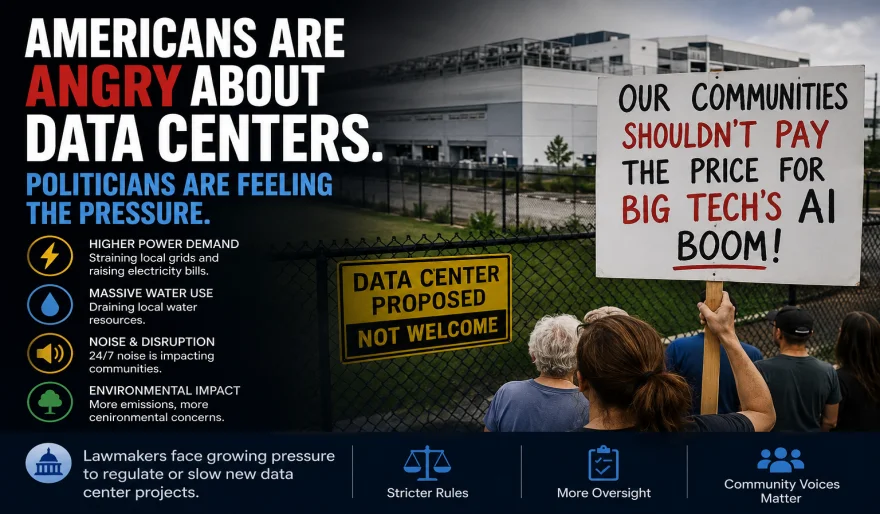
The AI boom is running into a new obstacle—not technology, but public opinion.
Across the United States, communities are pushing back against the rapid construction of AI data centers. Residents say the massive facilities are straining local power grids, consuming enormous amounts of water, creating constant noise, and driving up electricity costs. What was once seen as a source of jobs and investment is increasingly becoming a political issue.
The backlash is now reaching statehouses and local governments. Politicians are facing mounting pressure from voters to introduce stricter zoning rules, environmental reviews, and limits on how quickly new AI infrastructure can expand.
The timing couldn't be more critical. Tech giants including Microsoft, Google, Meta, Amazon, and xAI are investing hundreds of billions of dollars into AI infrastructure to meet surging demand for advanced models. But as these projects grow larger, so do concerns about who bears the environmental and financial costs.
The debate highlights a growing tension between America's ambition to lead the global AI race and the realities facing communities hosting the infrastructure that powers it.
Why it matters
AI leadership depends on building more data centers, but public resistance could delay projects, increase costs, and reshape how future AI infrastructure is approved.
The upside
- Greater oversight could encourage cleaner, more energy-efficient AI infrastructure.
- Communities may gain stronger protections and a bigger voice in future developments.
- Tech companies could accelerate investments in renewable energy and sustainable cooling technologies.
The downside
Lengthy approval processes and stricter regulations could slow AI expansion, increase infrastructure costs, and weaken the pace of innovation in the U.S.
Key takeaway
The AI race is no longer just about building bigger models—it's also about earning public trust. As local opposition grows, the companies that balance AI growth with community and environmental concerns will be best positioned to lead.

















 AI Agents