Stay Ahead of the Curve
Latest AI news, expert analysis, bold opinions, and key trends — delivered to your inbox.
Aluminium OS: Google’s AI-Powered Push to Merge Android and ChromeOS
4 min read Google is developing Aluminium OS, an AI-powered successor to ChromeOS that merges Android and desktop workflows. Gemini AI will be at the core, aiming to streamline enterprise tasks and push device convergence closer to reality. December 05, 2025 15:02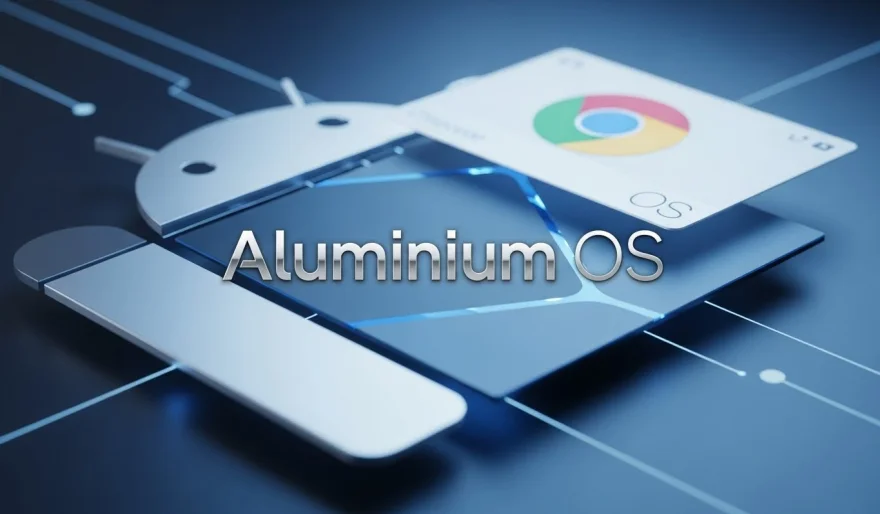
The holy grail of tech has always been one OS to rule them all — a seamless bridge between mobile and desktop. Apple is inching toward it with iOS/iPadOS and macOS, Microsoft tried (and largely failed) with Windows Mobile, and now Google is quietly plotting its next move: Aluminium OS, the AI-driven successor to ChromeOS.
Slated for Android-powered laptops in 2026, Aluminium OS puts Google’s LLMs, Gemini and Gemini Nano, at the center of the user experience. The goal isn’t flashy AI for the sake of it — it’s AI woven into workflows, enterprise-friendly, and tied to hardware decisions that could make machine refreshes for companies both strategic and cost-effective.
The promise is clear: Chromebooks have long been affordable, simple devices, and a converged OS with AI at its core could bring enterprise-level intelligence without breaking the bank. Features like Magic Editor, transcription, and summarization could migrate from mobile to desktop, streamlining daily work tasks. But there’s a catch: enterprises concerned about security may insist on local AI processing, limiting cloud-based Gemini compute, which could undermine one of the Chromebooks’ biggest advantages — low cost.
Google also needs to avoid the missteps of Microsoft’s AI experiments. AI should enhance workflows, not force users into new routines. The company’s experience embedding Gemini into Workspace shows that AI works best when it complements existing tasks, like live translations, AI-assisted emails, or contextual workspace insights. Aluminium OS may aim for similar value: smart provisioning, power management, and contextual access to enterprise resources — subtle, useful, but unlikely to wow users on first glance.
Technical challenges remain. Google must reconcile Android’s touch-first interface with mouse and keyboard workflows, ensure peripheral compatibility, and adapt drivers. But with the company’s resources and the massive Android developer ecosystem, these hurdles are manageable. The bigger question is adoption: can Aluminium OS convince procurement teams that its AI integration justifies switching from Windows or macOS? Price, efficiency, and tangible workflow benefits will be the deciding factors.
The hot take: Aluminium OS isn’t just a new OS — it’s Google staking a claim in AI-powered enterprise computing, merging affordability, mobility, and intelligence. If successful, it could replicate the Chromebook’s education-market success on a much larger scale, pushing the company closer to the elusive unified OS vision and shaking up enterprise device procurement along the way.








 AI Agents