Stay Ahead of the Curve
Latest AI news, expert analysis, bold opinions, and key trends — delivered to your inbox.
Alibaba Bans Employees From Using Anthropic's AI Coding Tool
3 min read Alibaba is reportedly prohibiting employees from using Anthropic's AI coding assistant, underscoring the growing competition and security concerns surrounding enterprise AI tools. July 03, 2026 12:57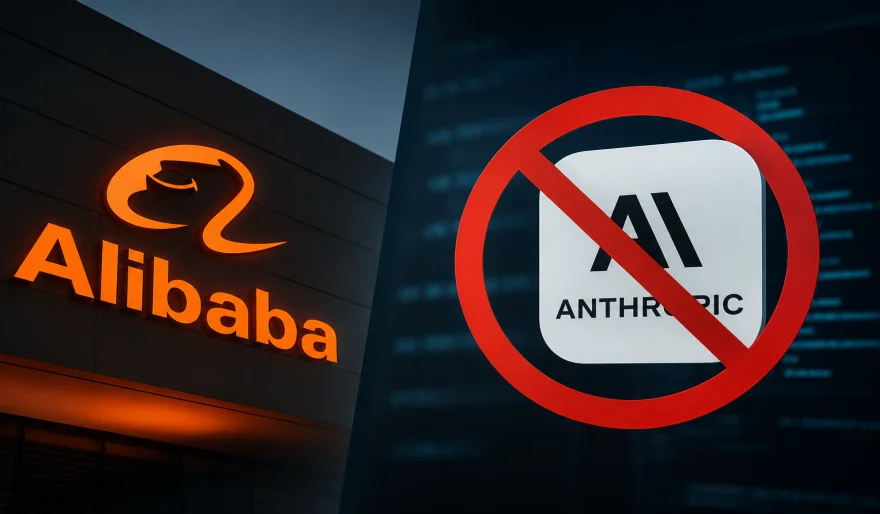
The AI race is becoming increasingly competitive—and companies are drawing clearer lines about whose AI their employees can use.
According to a source cited by Reuters, Alibaba is banning employees from using Anthropic's coding tool, a move that reflects growing concerns around data security, intellectual property, and competitive advantage in the AI industry.
While the exact reasoning hasn't been made public, the decision comes as major tech companies tighten internal policies around third-party AI tools. Businesses are increasingly wary that sensitive code, proprietary information, or confidential data could be exposed when employees rely on external AI assistants.
The move is also strategically significant.
Alibaba has invested heavily in developing its own AI ecosystem, including its Qwen family of large language models and enterprise AI products. Restricting the use of a rival's AI coding assistant could encourage employees to rely on Alibaba's in-house tools instead of competing platforms.
Anthropic's coding assistant has become one of the most popular AI tools among software developers, earning praise for its ability to write, debug, and explain code. But as AI assistants become embedded in daily workflows, companies are increasingly balancing productivity gains against security risks and competitive pressures.
Why it matters
The AI battle is no longer just about building the best models—it's about controlling which AI tools employees use inside the workplace. Internal AI policies are quickly becoming a new competitive weapon.
The upside
Organizations can better protect proprietary code, sensitive business information, and internal workflows by limiting the use of external AI services.
The downside
Restricting access to popular AI tools may frustrate developers who prefer certain assistants, potentially slowing productivity or limiting flexibility.
Looking ahead
As every major tech company builds its own AI ecosystem, expect more organizations to encourage—or require—employees to use proprietary AI tools. The next phase of the AI race may be fought inside the workplace as much as in public product launches.







 AI Agents