Stay Ahead of the Curve
Latest AI news, expert analysis, bold opinions, and key trends — delivered to your inbox.
AI Coding Tools: A Blessing and a Curse for Open-Source
2 min read AI coding tools promised faster, cheaper software development, even for resource-strapped open-source projects. In practice, the impact has been mixed: while feature creation is easier than ever, messy AI-generated code and maintenance challenges risk fragmenting projects. The result isn’t the death of software engineers, but a shift in their role toward balancing speed, quality, and sustainability in the AI era. February 19, 2026 14:57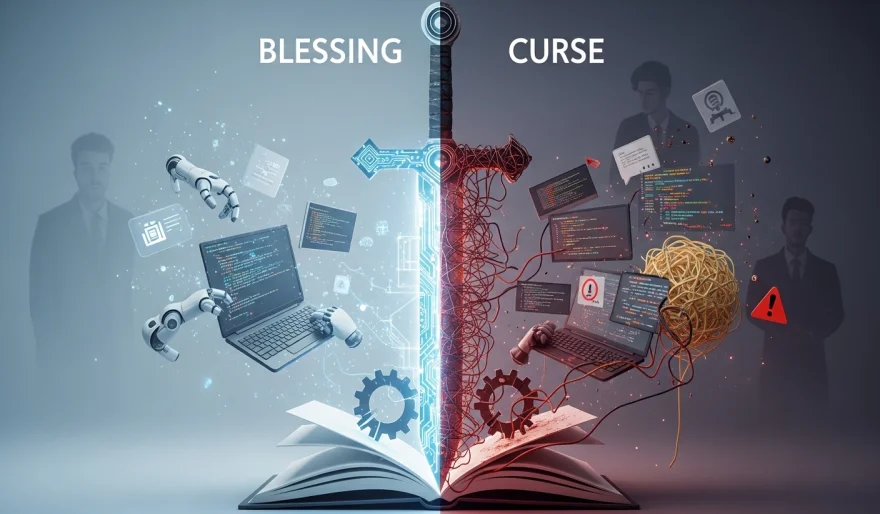
The promise of AI coding tools is seductive: software creation becomes cheap, fast, and accessible, even for startups trying to replicate complex SaaS platforms. Analysts have predicted that “vibe coding” could let small teams churn out features that once took entire engineering departments. In short: traditional software companies might be doomed.
But for open-source projects, the reality is far more complicated.
Open-source communities were supposed to be early beneficiaries of AI coding — filling in gaps where resources are scarce, automating repetitive tasks, and accelerating development. Yet the benefits have been uneven. Industry experts point out that AI-generated code is often messy, buggy, or redundant. The flood of “cheap code” can overwhelm projects, creating maintenance headaches even as feature development speeds up.
In practice, AI hasn’t simplified software ecosystems so much as made them more fragmented. New tools allow developers to build faster than ever, but maintaining and integrating those features remains a major challenge.
The takeaway? The era of AI-powered coding isn’t killing software engineers — it’s changing their role. The future will reward those who can balance speed with discipline, and creativity with maintainability. Open-source projects may not be the utopia of effortless development that some predicted, but they’re still very much alive — just a bit messier.













 AI Agents